Towards the Unionization of Applied Behavior Analysis Workers
We are the direct care professionals in Applied Behavior Analysis. We are technicians, RBTs, BCaBAs, and BCBAs. We are schedulers, assistants, advocates, counselors, and clinicians. We are carers with a critical mission: change the world with behavior analysis. For students, for children with autism, for our elders, for industries and organizations. We collect the data, we design the treatment plans, and we show up, every single day, in every possible way.
OUR WORK IS DRIVEN BY CARE. For many, this field is a dream job, a chance to serve the community and turn a passion into service for your community. Many give up their free time, dedicate themselves to hundreds if not thousands of hours of study, risk their physical safety, and take out expensive student loans for a chance to become a part of a solution to the mental health needs of our community. We're care workers by trade - but does our trade care for us?
A LIVING WAGE FOR RBTs. Behavior technicians and RBTs form the backbone of our industry, providing direct services to clients every day. They are also the most exploited:
When sessions are cancelled, companies pass on the cost of doing business to RBTs, the lowest-paid professionals in our industry. RBTs commonly work with children, which means that flu season, family vacations, or other emergencies mean they lose opportunities to work.
This leaves RBTs with unstable pay, forcing them to get second or even third jobs to make ends meet.
Companies will often pressure families and RBTs to continue sessions at all costs to maximize billing while subtly reminding the RBT that their livelihood is also at stake. This creates ethical quandaries for RBTs and the BCBAs they work with.
A RETURN TO THE 8-HOUR DAY. Our hours are long. We commute to clinics; we commute between clinics. We suffer wear and tear on cars we can't afford to replace and barely afford maintenance on. The average clinician works before the sun rises and after the sun sets. We are deprived of sunlight and sleep while often being the light at the end of the tunnel for the families we serve.
WE HAVE THE DATA. We take data for a living, and the data on how we make a living is clear: each year, a significant percentage of RBTs exit the field.
CentralReach publishes an annual report, indicating an accelerating trend in RBT turnover year-over-year ranging from 72.7% to 95.5%.
From the BACB's published certificant data, the number of RBT certificant exits ranges from 27.65% to 31.33% over the last four years.
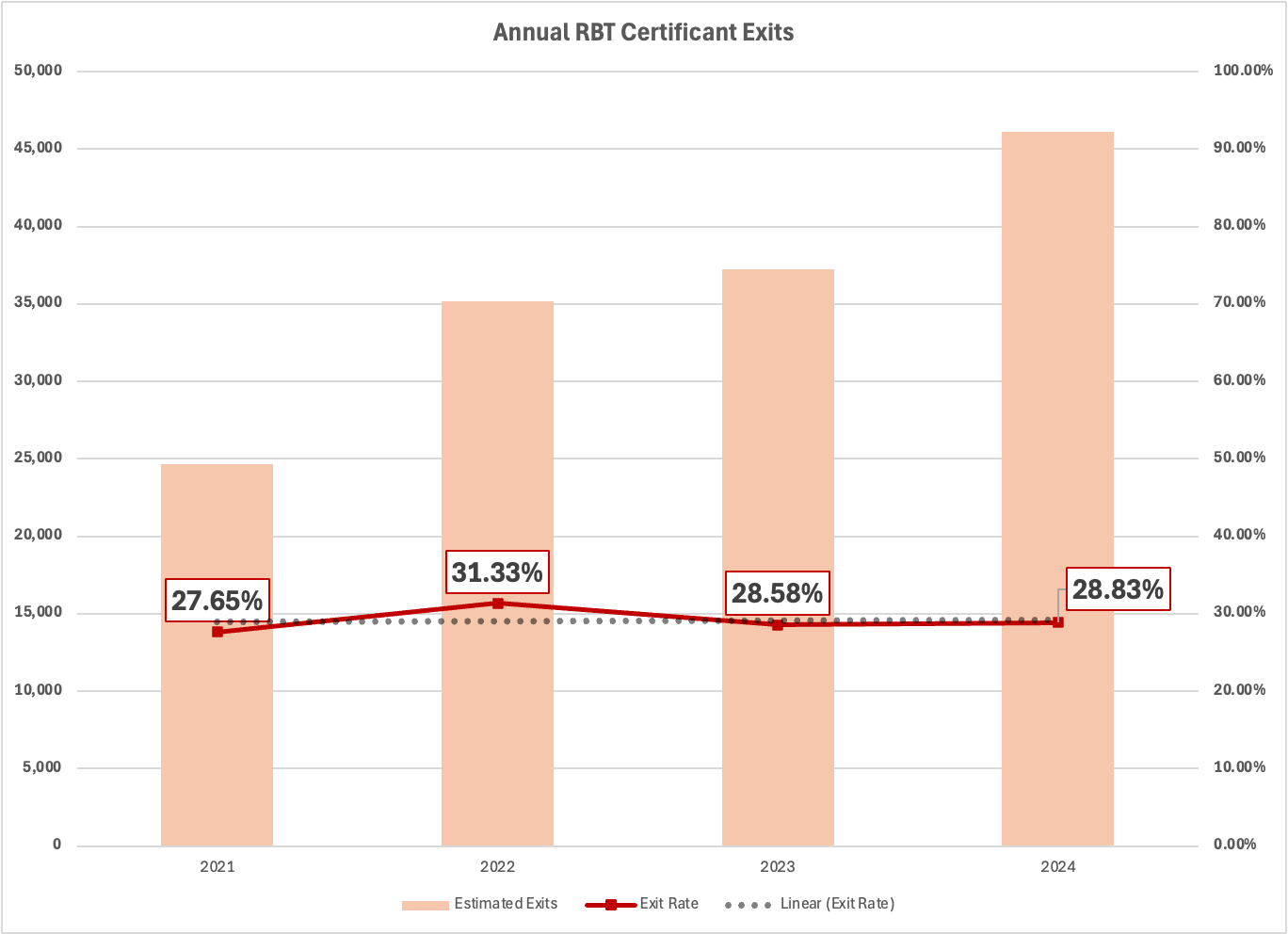
Data from the Behavior Analyst Certification Board. (n.d). BACB certificant data. Retrieved from https://www.bacb.com/BACB-certificant-data.